

Let's Get Positive, Positive; Climate Action; The Pros and Cons of a Well-Being Economy; Just Say No to Dystopia
The world's a mess but not everything is gloom and doom; headlining some good things

Political commentary, information on climate change, misinformation and disinformation critiques, and discussions on social issues.
So I recently availed myself of the charms of a far-right podcast. I found it interesting that the concerns of the far-right podcaster were mirror images of the concerns of far-left podcasters. For example, the far-right podcaster was concerned about potential geopolitical conflicts due to differing national approaches to climate change. Far-left climate commentators are equally concerned about the potential for geopolitical conflicts due to differing national approaches to climate change. It's just that on one side of the mirror doing something about climate change sets off conflict, and on the other side not doing anything about climate change sets off conflict.
Precariousness does seem to lead to conflict - whatever side of the mirror you’re on.
Meanwhile, unbeknownst to the mainstream/lamestream media in the US, some citizens of the world are actually attempting to mobilize for climate action.
Yup, they’re not so much fretting about conflict as attempting to do something positive. A fair number of those action-oriented citizens live in European cities. Local leaders of European cities trying to develop their urban areas are making active efforts to ensure the development meets climate change and sustainability goals.
That's not surprising, because cities are where the action is. Cities are where innovation-minded folks congregate to be, you know, innovative.
European cities oriented toward climate action currently host about 2.3 million 'green' jobs in fields like renewable energy.
That's about 8% of the jobs in those cities. City leaders are motivated to expand on those numbers partly because they anticipate creating more 'green' jobs could save them collectively around 280 billion dollars in health care costs.
A 'green' job is one that does things like promote health and well-being, preserve and restore the natural environment, and help limit greenhouse gas emissions.
Green jobs can increase both the effectiveness and the popularity of a city's attempts to take climate action.
What's striking about the emphasis that some cities have on green jobs is that the underlying mindset is undeniably positive.
Hopeful. Optimistic. It's a mindset firmly oriented toward making things better based on the belief that human beings are actually capable of making things much better than they are today. In the old days, people used to call that a belief in progress.
It's interesting because belief in progress has been in short supply since right around the time of the Great Recession, which was global in effects. It's almost as though the world said collectively, 'Yeah, well see what progress effin gets ya! A global recession. Austerity. Financial collapse. Concentration of wealth and power. Boo progress!"
So instead of progress we got something more or less like a 15-year attempt to figure out who’s the shithead who effed everything up. Your guy or my guy? Cuz it's definitely effed up.
The pessimism and the policies that pessimism spawned have stuck around far longer than the Great Recession did. Our popular media have been awash in dystopias and planetary collapses - and nobody's been arguing with their plausibility. 'The world's a mess and we hate everybody in it' has been the underlying motto of many of our autocratic and oligarchic leaders and pundits.
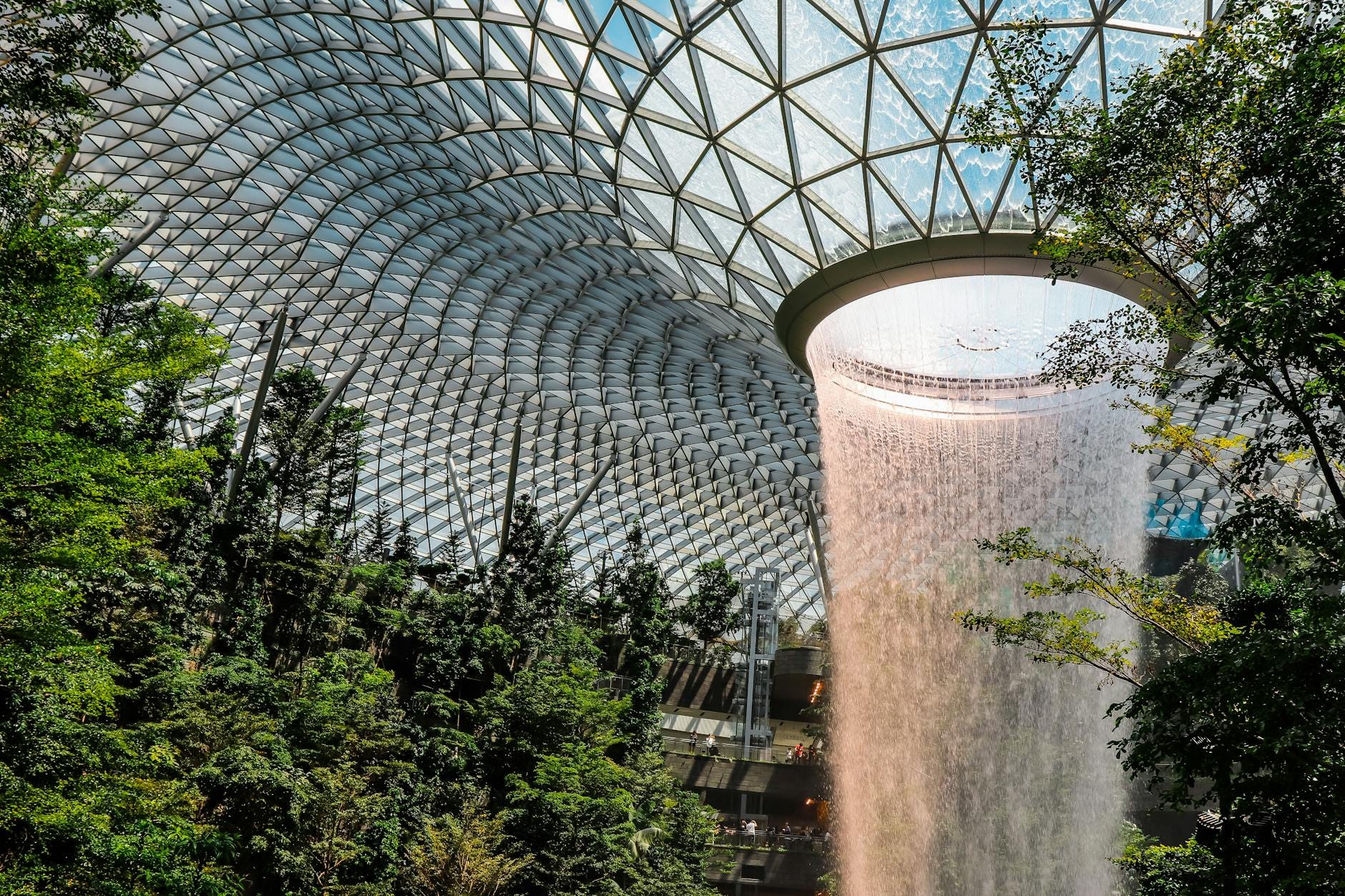
City leaders who believe in climate action though - they believe that humanity can actually do well. That with focus and determination, humanity can thrive in a climate-friendly utopia.
Read 12 Sustainable Cities: How Urban Areas are Going Green
I’m not sure about utopia, but I'd sure rather hear the positive people hammer down these days instead of the 'we need retribution against the shitheads who made us so pessimistic in the first place' mantras prevalent in my nation of origin.
We may not be able to create a utopia of well-being, but I do think we can do a lot better than we are now.
The Pros and Cons of a Well-Being Economy
Around the world, there are people who believe that the words 'economy' and 'well-being' are not necessarily antagonistic. There are also those who believe that collectively we should stop measuring national success in terms of economic measures like GDP. They believe in something they call a 'well-being economy.'
One of the reasons some people have started to believe in things like a well-being economy is that the not-so-well-being economy has actually produced plenty of money. There's enough money sloshing around the planet that every adult's share of it comes out to about $77,000. In a rational world, that would be considered plenty of money. The well-being problem is that soooooooo many people don't have their share, and a few have waaaaaaaaaay too much.
Wellbeing Economy: An economy
that is designed with the purpose
of serving the wellbeing of people
and the planet first and foremost; in
doing so, it delivers social justice on
a healthy planet.
Those people are harbingers of a paradigm shift that at some point will need to take place. They are not necessarily anti-capitalist but post-capitalist. The economic philosophies of the Industrial Revolution can only take you so far when you are in the throes of a different type of technological revolution led by the development of the internet and artificial intelligence algorithms.
It isn't that people haven't known that the costs of industrial capitalism are high.
They've known that for a long time. What people haven't had is a vision for an alternative that bypasses the pitfalls of communism and industrial socialism. The vision of an alternative is what some nations are working on now.
Implementing any type of a positive vision requires some level of basic agreement among the residents of whatever area (city, state, nation) you are mobilizing for action. The citizens need to desire similar things, even if they disagree on how to achieve them.
One of the primary obstacles to well, positivity, optimism, progress, etc. has been the lack of such agreement in many areas of the world. For example, you don't really have a positive vision of India if your main selling point is being nicer to Hindus than Muslims because Muslims have been mean to Hindus before.
You can't really implement a positive vision of the UK based on Brexit. The Brexiteers said you could, but they were lying, and it hasn't worked out that way. You can't really implement a positive vision of Brazil or Italy or France or Germany when the far-right politicians have outsized sway over the national conversations. Because positive is not what far-right politics are about. You can't build a positive vision of the USA based on hatred of immigrants and DEI, even if someone tells you they can. Because hatred of immigrants and DEI sows animosity, not agreement.
Which brings me back to the far-right podcaster who is a mirror image of the far-left podcasters I come across. What they both want, and feel they do not have, is power. The power to resist the elites and the billionaires and the politicians and the corporations and the big forces that they think control the world.
And those far left and far right noisemakers and alarmists and yes, conspiracy theorists are not so different from anyone else in that regard. Because 'regular people' around the world have the distinct and unpleasantly accurate perception that they are getting screwed by people who are richer and more powerful and more corrupt than themselves.
In spite of concerted and successful attempts by malevolent actors to convince us otherwise, people who think they're on opposite sides of the spectrum actually overwhelmingly agree on one thing - they want more power for regular people like themselves.
And since they don't have it - they're pissed off and disagreeable.
This does not have to last forever, and it probably won't. If anything, the time is coming to ditch the pessimism, animosity, and economic models of the last 40 some odd years and plunge headlong into agreeing with each other about some stuff. We need to start collectively valuing learning (including from each other) and adaptability (including to the climate-related changes we're already seeing). We can do this, and we just might.
Admittedly, we're a long way from that right now. And that's partly because many of us are in thrall to old-fashioned ideas. Ideas that we don't have to believe in and aren't benefiting from believing in. Some of those ideas are called ‘neoliberal’, for example.

Read: Technologies and Market Incentives - or How Neoliberalism Put You at Risk
Ideas about the 'economy' are just ideas.
People existed for a long long long time without the ones we have now. And we could all exist for a long long long time if we changed them. On the other hand, we might not exist all that long at all if we don't change them soon.
An economy is simply a system, an agreement among people, as to what we are allowed to do to get what we need/want out of life.
We could have an idea that groceries are free for everyone - as long as you don't waste any food. You would get charged for what you waste not what you consume.
This is the kind of idea that gives capitalist evangelists and right-wingers heart attacks. That's because it reminds them of 'socialism'.
Despite what Reagan supposedly said, the most terrifying words to these people are actually "You know, socialism isn't really all that bad."
An idea about distributing groceries at no charge is just an idea. It may seem like a strange and unrealistic idea, but it's not necessarily stranger than the ideas we have today.
For example, it's possible that in your life you have driven a car that you call 'your' car but it isn't your car, it's a bank's car except the bank sold your loan to sold someone else, so it's some other company's car, but you call it yours although really you are just borrowing it kind of until you finish paying it for it. If you sold the car, you would actually only be selling the portion of the car that belongs to you and paying back the company that owns it, which means that you are selling part of a car, which is weird. The whole thing is weird.
But you're used to it. If you were used to everyone being expected to work on growing groceries locally and then taking whatever they wanted for free but then their mom gets all pissed off when they don't eat what they took because that's waste and you get charged for it - well then you'd be used to growing things and eating less cuz you don't want to get charged for taking more than you can eat. So you'd be slimmer and probably healthier and you wouldn't worry about starving and you'd just think that's totally normal. And you would FREAK OUT if someone proposed a system to you in which you had to pay to eat (instead of paying to not eat) and if you don't have enough money - no groceries for you!!
One of the things about the current system is that it demands constant economic growth. Continuous growth doesn't happen, of course, because continuous anything isn't really the way the universe works. When growth doesn't happen, though, it's often called a recession. And people hate recessions. Recessions are when everything gets worse all at once. Which means that humanity is on a nerve-wracking treadmill trying to keep up with its need for constant growth.
Of course, if the priority became constant well-being, then we'd all be on an exhausting journey toward well-being. Because continuous anything becomes a real drag.
The difference, though, is that all that continuous economic growth is creating the kind of changes to the climate that are gonna make aspirations of 'well-being' seem much more desirable than the kind of economic growth that produces another luxury hotel with a pool on the roof along with unexpected torrential rains that accidentally kill you.
To put it another way, the paradigm needs shifting from the current obsessive ruminating on what we don't like about the world and other people - to going after whatever it is that we do want. This does not necessarily require a comprehensive overhaul of the prevailing economic systems so much as a switch in focus, values, and measurement systems. It requires switching from successive 'wars' on things like cancer to goals - like a 50% reduction in cancer deaths by the end of the decade.
Of course, the implementation of any such paradigm shift is going to be experimental by necessity. For one thing, we're out of practice having aspirations of a better planet, better ways of living, and so on. Which means there'll be lots of learning, changes, adaptations, adjustments, and so on. And in many ways, the world at large won't be truly ready for such a paradigm shift until the technological shifts produced by AI, robotics, and algorithms have reduced the need for the kind of labor that dominates current economic thinking.
Furthermore, people have many different, and competing, values. For one group of people, stability might be a sign of success. Four generations living in a home that has been in the family for 80 years might seem ideal to one group. They would want policies, and an economy, that allowed families to stick together in the same locale over many years, preserving their traditions. For another group, an economy that allows for ample leisure and creative opportunities for residents represents the ideal. Not all competing values are mutually exclusive, but as with everything else, not everyone will agree, and trade-offs will be made.
It's also hard for people to envision any type of alternative economic setup because people alive today have grown up immersed in a certain set of American/Western values that created and permeated the United Nations and many other global institutions. At the end of the last world war, the United States essentially took over the world. Probably not what Hitler was going after, but, you know, his bad. You never know what you’re going to get when you start an actual world war (Trump might want to take note of that particular truism).
Fortunately or not for the rest of the world, the United States is accidentally shedding itself of its status as world runner. It may seem like Trump is running the world right now, but he is, by his own admission, doing that in favor of ditching the whole world running thing. He is actively encouraging enemies and potential enemies to arm themselves and shore up their economies in such a way as to not need the US anymore.
China, of course, is actively encouraging the rest of the world to depend on it. So, excessively simple logic would lead to the conclusion that China's values are going to become increasingly important to the global economy, and the US's values are going to become increasingly an afterthought. As in - the USA - whatever.
China, strangely enough, does have different economic values than the US, and those values do include stability and the appearance of harmony. That's not to say the Chinese are running around worrying about everyone's well-being. That is to say, however, that the language and appearance of a well-being economy might be compatible with China's values in a way that they aren't with American values. The Chinese are much more likely to say 'we'll give you well-being in exchange for some freedom.' Americans do not say that. The prototypical American response to such a proposal is something along the lines of 'FUCK WELL-BEING!'
Promoting well-being is a different way of managing global power than 'fuck well-being and chase the greenbacks' is, but it can still be a way of managing and maintaining global power.
Of course, it's not like Trump is gonna push China into getting pretty fed up is he? So it’s not like China’s values are going to be more and more important in the future. Or are they?
LET’S JUST SAY NO TO DYSTOPIA
What if we stopped imagining that our children will be forced to endure the dystopia we are creating for them right now? What if we put some real effort into imagining a future that we actually wanted? What would such a future look like? How would future generations experience it? What would future well-being look like?
Well-being may be a vaguely utopian way of expressing a certain concept of improvement, but the basic idea of asking people what they actually want, instead of assuming that what they want can always be defined and predicted with current economic models and concepts, isn't utopian at all. It's just common sense.
Even economists are well aware that people don't actually want what economic models predict they want. Not only do they not want it, they don't even act like they want what economists theorize they want. Given ample evidence that people aren't rational economic actors, economists have resorted to ideas like 'as-if'. People aren't rational but when you put them in markets, in aggregate they act as if they are.
Actually they don't. There is a certain subset of the population that is, in fact, hyper-rational in a traditional economic sense. They value money and money only. And they have an outsize effect on the appearance of markets because they are passionate about them. They'll lie, cheat, steal, lobby, kill, legislate, threaten, evade, accumulate, corrupt, bribe, and anything else you can imagine to keep their hold on the one thing they love most - money.
Everyone else drifts along, not all that economically rational. Getting not all that rich. Valuing things that aren't truly captured by the current economic models. Like love. Sex. Laughter. Family. Fireworks. A good night's sleep. Smiles on their children's faces. Joy. Clean water. Clean air. No potholes in the roads. Justice. A feeling of belonging. Pride. Basic human decency. Status. Relaxation. Puppies and kittens. Feasting and parties. Escape. Peace of mind. Laziness. Reverie. And so on and so forth. Intangibles. Quality of life.
Not that money doesn't matter. It does. Climate change and rising sea levels matter. So does money. Except that it doesn't have to be money. It is true that people in developed countries expect a lot from their nations. They expect a lot in the way of payment for the services they provide to their economies. But those payments don't have to come in the form of money.
They can come in the form of leisure time, education, health care, freedom from financial worry, security, stability, etc. In some European countries, the social contract is written exactly like that. Citizens receive many benefits from their society in lieu of unlimited (obscene) amounts of money.
That's a frightening concept to American economic orthodoxy in which the only possible substitute for money is more money and anything less is a terrifying abridgment of freedom. Which means that American citizens do not in fact have the freedom to purchase things like roads without potholes or security and stability because those things are provided by governments via taxes which means some money-passionate people will be deprived of the means to make obscene amounts of cold hard gains in the stock market.
Again, there are values other than money. Such as freedom of expression. The right to an education. Equality and fairness. Adequate housing. Peace. Responsibility.
So go ahead. Imagine an ideal future. For you, your community (however defined), your nation. Like this: I imagine living a life where I have enough resources to go out to eat at nice restaurants and baseball games without financial worry. Otherwise, I live modestly but comfortably. I have the freedom to express myself how I want. I have the freedom and ability to access information regardless of whether it's favorable or unfavorable to a particular government, corporation, or public figure.
My community provides equal access to education for all from pre-school through university. Everyone in my community has a place to live. My nation is at peace and promotes peace. My nation is powerful but also responsible and restrained. My nation addresses the concerns of its citizens. I express my concerns. My community comes together to express its concerns and provide information to its members.
See? It wasn't that hard. It wasn't even that utopian. Simple stuff. Doable stuff. Maybe even stuff that was so close to being reality at one time that it's almost hard to believe we didn't have it.
Another person's ideal future emphasizes different things: They say 'I have access to excellent health care and my work is satisfying. My community has reliable infrastructure, and it is easy and convenient to get around my city and out to the rural areas I want to visit. My nation has a thriving economy, and the natural environment is honored and well-cared for.'
Another person says 'I have a good education and a good steady income. I feel very safe in my community, and everyone gets along well and supports one another. I live in a free country where everyone is treated equally and has equal access to opportunity.'
Yet another person says 'I have plenty of leisure time and I'm at peace with myself. My community is prosperous, and I have a good sense of security here. My nation values personal freedom and provides opportunities for individuals to develop themselves according to their own talents and abilities.'
The point here is that the things most people actually want aren't that hard. They don't involve being a trillionaire or stomping other people in the face, unlimited consumer goods or working 60 hours a week just to survive. How do I know? Because the things I mentioned in my examples are things actual people asked for. People in a developed country mind you. People in another country might ask that their kids not die of malaria.
The thing is, the world at large has more than adequate resources to make people's tentative dreams of a reasonably decent life come true. The actual problems is that capitalism, in and of itself, without careful supervision, has terrible priorities. Unregulated capitalism provides a terrible system of resource allocation.
Yup that supposed strong suit of capitalism, efficient allocation of resources to what people actually want - turns out to be the thing that capitalism sucks at. It absolutely doesn't give people what they want but it does give them toaster ovens that can do back flips, whip up a mess of pancakes and relay your gluttonous eating preferences back to a private company that has every intention of exploiting that information for its own profit.
Let's say it again. When people imagine their ideal futures for themselves and future generations, a spiffy new ‘smart’ toaster oven that can sing arias and calculate how many calories they've consumed in their entire lives is not at the top of the list. The fact that some people will buy such toaster ovens does not mean that such toaster ovens are what humanity truly craves.
People get such toaster ovens because toaster ovens are what capitalism can spit out - instead of say, a beautiful sparkling brook near your home cooing and whispering with the hum of birds and insects and gently swaying flora.
Now, if we could cajole people to express their desires for the future in positive terms (I want this for myself, my community and my country) instead of the current overwhelmingly negative terms (I want this, that and the other that some people who are not me are doing to STOP and for them to be forced to do everything MY way) - we might have a chance.
And that ain't gonna happen until we get people who care to start crafting their communications in the strong language of actual goodness, instead of the wimpy language of impotent caviling about other people.
It’s more than possible to be pretty fed up, good, strong, and positive - all at the same time.
You could consider this a veiled hint to the Democrats that they need to get better at ‘messaging.’ But it isn’t. It’s a not at all veiled call for anyone and everyone who can to start talking about what people actually do want - instead of trying to constantly remind them of grudges they ought to hold against others.
Peace out.